Pixel-scale lab · vehicle footprint
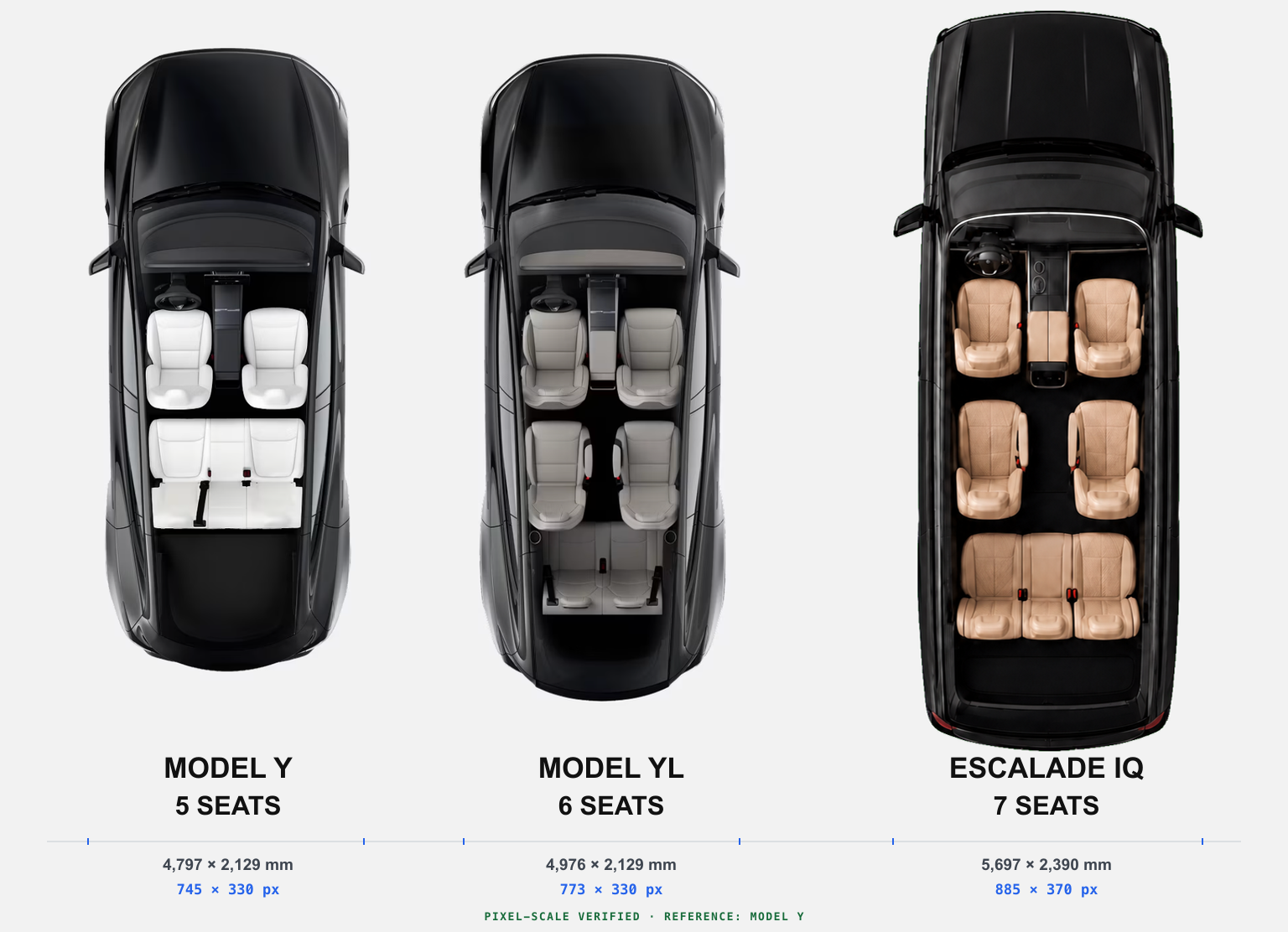
Comparison graphics lie by default — someone eyeballs a scale factor and the SUV quietly gains a foot. This tool derives the scale from manufacturer specs, renders the footprints live, and tells you exactly how far off a render is.
01 / Live footprint
02 / Dimension calculator
03 / Verified comparison
04 / Powertrain & packaging
| Vehicle | Battery | Peak DC charge | Architecture | Boot (seats up) | Max cargo | Frunk |
|---|
Figures are manufacturer- and press-published and vary by market and trim; Model Y L battery and cargo figures reflect the six-seat launch specification, and iX1 figures the xDrive30. Volumes converted at 28.317 L per cubic foot.
05 / Calibration ledger
Errors are measured against Model Y as the reference. The BMW iX1 is not in the verified render, so its pixel figures are derived from that reference rather than measured.
| Vehicle | Seats | Actual L × W | Rendered L × W | Length error | Width error |
|---|
A 1% scale error on a 5.7-metre SUV is 57 mm of imaginary vehicle — enough to make a car look like it fits a garage bay that it does not. Every render on this page is held to ±0.5%.